

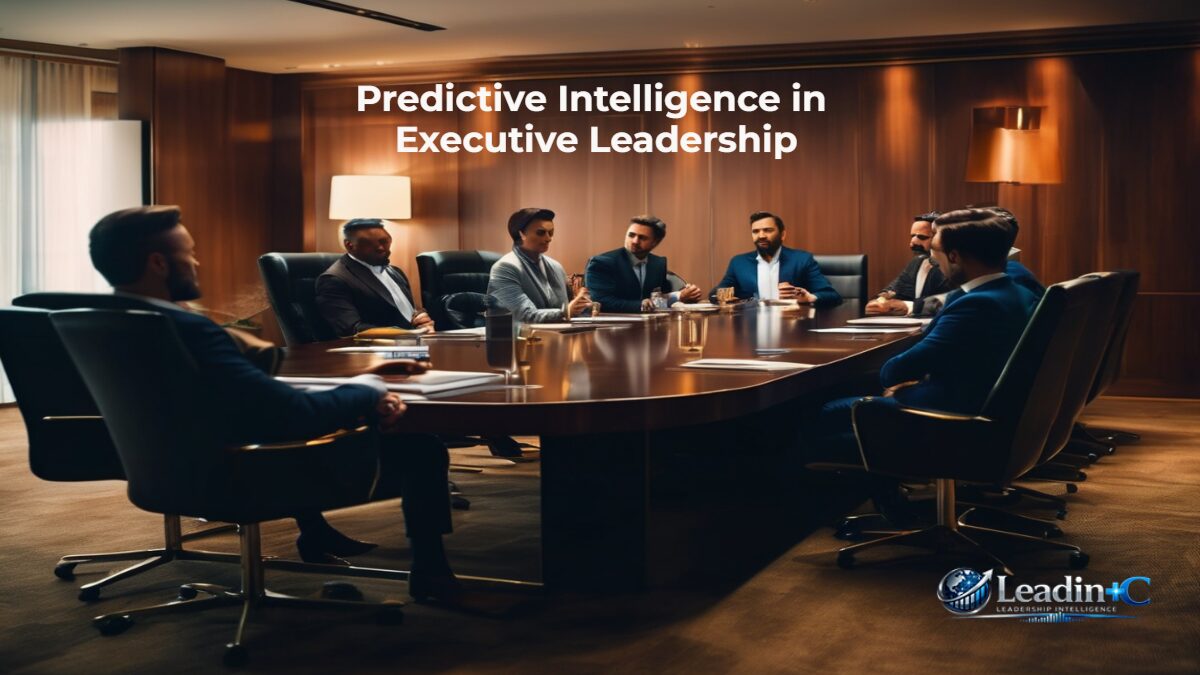
Predictive Intelligence in Executive Leadership
Introduction
The global business environment is evolving faster than traditional leadership systems can adapt.
Artificial intelligence, economic volatility, digital transformation, geopolitical instability, cybersecurity threats, and accelerated innovation cycles are reshaping enterprise operations across every industry.
Modern executives no longer have the luxury of relying solely on:
- Historical data
- Executive intuition
- Delayed reporting systems
- Conventional operational structures
Organizations now require leadership systems capable of:
- Predicting market changes
- Anticipating operational risks
- Identifying growth opportunities
- Improving strategic agility
- Accelerating decision-making
- Enhancing enterprise resilience
This has led to the rise of Predictive Intelligence — an advanced enterprise capability that combines artificial intelligence, predictive analytics, operational intelligence, and strategic forecasting into executive leadership systems.
It is rapidly becoming one of the most important drivers of:
- Competitive advantage
- Executive effectiveness
- Strategic planning
- Enterprise transformation
- Operational optimization
- Sustainable growth
This article explores:
- What Predictive Intelligence means
- Why it matters in executive leadership
- How predictive systems improve strategic planning
- The role of predictive analytics in risk management
- How intelligent forecasting enhances operational performance
- The future of AI-powered executive leadership
What Is Predictive Intelligence?
Predictive Intelligence refers to the use of:
- Artificial intelligence
- Machine learning
- Predictive analytics
- Real-time enterprise data
- Statistical modeling
- Scenario forecasting
- Operational intelligence
to anticipate future events, trends, risks, and strategic outcomes.
Unlike traditional business intelligence systems that focus primarily on historical reporting, it focuses on:
- Forecasting future conditions
- Identifying emerging risks
- Anticipating market behavior
- Modeling strategic scenarios
- Supporting proactive decision-making
Predictive Intelligence transforms leadership from reactive management into proactive enterprise orchestration.
Why Predictive Intelligence Matters in Executive Leadership
Modern executives operate in environments defined by:
- Constant disruption
- Data complexity
- Global competition
- Economic uncertainty
- Rapid innovation cycles
Traditional leadership systems often struggle because they rely heavily on:
- Historical assumptions
- Manual reporting structures
- Delayed operational visibility
- Linear strategic planning
Predictive Intelligence improves executive leadership by enabling organizations to:
- Anticipate disruption
- Improve strategic accuracy
- Respond faster to market changes
- Reduce uncertainty
- Optimize enterprise performance
- Strengthen resilience
In the AI-driven economy, predictive capability is becoming a strategic necessity.
Predictive Intelligence and Strategic Planning
Strategic planning has traditionally depended on historical trends and executive assumptions.
However, modern markets evolve too rapidly for static planning models.
Predictive Intelligence transforms strategic planning through:
- Data-driven forecasting
- AI-powered scenario analysis
- Predictive market intelligence
- Dynamic operational modeling
1. Strategic Forecasting
Predictive systems analyze:
- Market conditions
- Customer behavior
- Economic indicators
- Industry trends
- Competitor activity
to forecast future business scenarios.
Executives gain greater strategic visibility before making major decisions.
2. Scenario Modeling
AI-powered scenario simulations help leadership teams evaluate:
- Best-case outcomes
- Worst-case scenarios
- Market volatility impacts
- Supply chain disruptions
- Financial risk exposure
This improves strategic preparedness.
3. Opportunity Identification
Predictive Intelligence identifies:
- Emerging growth markets
- Innovation opportunities
- Customer demand shifts
- Expansion potential
Organizations can act before competitors recognize these opportunities.
4. Resource Optimization
Predictive planning systems improve:
- Budget allocation
- Workforce planning
- Operational scaling
- Investment prioritization
This increases enterprise efficiency and execution precision.
Predictive Intelligence and Risk Management
Modern enterprises face increasingly complex risks, including:
- Cybersecurity threats
- Geopolitical instability
- Supply chain disruption
- Economic volatility
- Regulatory changes
- Operational vulnerabilities
Traditional risk management systems often respond after a disruption occurs.
Predictive Intelligence improves enterprise resilience through proactive risk forecasting.
Predictive Risk Detection
AI systems continuously monitor:
- Enterprise operations
- Financial performance
- Market conditions
- Security indicators
- Global events
to identify early warning signals.
Real-Time Risk Visibility
Executives gain immediate insights into:
- Operational weaknesses
- Emerging threats
- Strategic vulnerabilities
- Financial instability
This improves decision speed and organizational readiness.
Crisis Prevention
Predictive analytics helps organizations:
- Reduce operational failures
- Prevent financial losses
- Anticipate market disruptions
- Strengthen continuity planning
Organizations become more resilient and adaptive.
Intelligent Compliance Monitoring
Predictive Intelligence supports:
- Regulatory forecasting
- Governance monitoring
- Policy compliance analytics
This reduces enterprise exposure to legal and regulatory risks.
Predictive Intelligence and Operational Performance
Operational efficiency is increasingly tied to enterprise intelligence.
Predictive systems improve operational performance by enabling organizations to:
- Optimize workflows
- Automate processes
- Predict inefficiencies
- Improve execution speed
Operational Analytics
AI-powered operational systems monitor:
- Productivity
- Workflow efficiency
- Resource allocation
- Supply chain performance
- Employee performance
This improves enterprise-wide visibility.
Intelligent Workflow Automation
Predictive Intelligence enables:
- Automated decision systems
- Intelligent task prioritization
- Dynamic resource allocation
- Performance optimization
Operational execution becomes faster and more scalable.
Predictive Maintenance
Manufacturing and logistics organizations use predictive systems to:
- Anticipate equipment failure
- Reduce downtime
- Improve infrastructure reliability
This lowers operational costs and improves continuity.
Enterprise Synchronization
Cross-functional departments become aligned through integrated intelligence systems.
This strengthens:
- Collaboration
- Communication
- Strategic execution
- Organizational agility
How AI Powers Predictive Intelligence
Artificial intelligence is the foundation of modern predictive systems.
Machine Learning Models
AI systems analyze historical and real-time data to identify:
- Behavioral patterns
- Operational trends
- Market anomalies
- Predictive signals
The systems improve continuously through learning algorithms.
Natural Language Processing (NLP)
AI can analyze:
- Market reports
- Customer sentiment
- News data
- Competitive intelligence
to generate strategic insights.
Intelligent Automation
AI automates repetitive analytical processes, allowing executives to focus on:
- Strategic leadership
- Innovation
- Growth
- Enterprise transformation
Predictive Decision Systems
AI-powered platforms provide:
- Strategic recommendations
- Risk probability assessments
- Forecasting models
- Scenario analysis tools
Decision-making becomes more intelligent and data-driven.
Industries Benefiting From Predictive Intelligence
Predictive Intelligence is transforming industries worldwide.
Financial Services
Banks use predictive analytics for:
- Fraud detection
- Credit risk analysis
- Market forecasting
- Portfolio optimization
Healthcare
Healthcare organizations improve:
- Resource allocation
- Patient management
- Operational planning
- Predictive diagnostics
Manufacturing
Manufacturers use predictive systems for:
- Supply chain optimization
- Predictive maintenance
- Production forecasting
- Operational automation
Retail
Retail organizations improve:
- Customer intelligence
- Inventory management
- Demand forecasting
- Personalized experiences
Technology
Technology enterprises use predictive systems to:
- Accelerate innovation
- Improve scalability
- Optimize digital infrastructure
The Future of Predictive Intelligence in Executive Leadership
The future of executive leadership will increasingly depend on predictive enterprise ecosystems.
Several trends will shape the next generation of intelligent leadership:
AI-Augmented Executive Decision-Making
Executives will increasingly work alongside AI advisory systems capable of delivering predictive strategic recommendations.
Autonomous Enterprise Intelligence
Organizations will deploy self-optimizing systems capable of:
- Detecting inefficiencies
- Predicting risks
- Reallocating resources automatically
Hyper-Predictive Analytics
Future systems will forecast enterprise outcomes with greater speed and precision.
Integrated Global Intelligence Networks
Organizations will combine:
- Financial intelligence
- Operational intelligence
- Geopolitical intelligence
- Market intelligence
- Customer intelligence
into unified strategic ecosystems.
Ethical AI Governance
Responsible AI governance, transparency, and accountability will become essential leadership priorities.
Frequently Asked Questions
What is Predictive Intelligence in executive leadership?
Predictive Intelligence in executive leadership refers to the use of AI-powered analytics, predictive modeling, and real-time enterprise data to improve strategic decision-making, risk management, and operational performance.
How does Predictive Intelligence improve strategic planning?
Predictive Intelligence improves strategic planning by forecasting market trends, identifying growth opportunities, modeling future scenarios, and enabling data-driven executive decisions.
Why is Predictive Intelligence important for risk management?
Predictive Intelligence helps organizations detect operational, financial, cybersecurity, and geopolitical risks early, allowing enterprises to strengthen resilience and prevent disruption.
How does AI support Predictive Intelligence systems?
AI supports Predictive Intelligence through machine learning, predictive analytics, intelligent automation, scenario forecasting, and real-time enterprise intelligence systems.
What industries benefit from Predictive Intelligence?
Finance, healthcare, manufacturing, technology, logistics, retail, and government sectors benefit significantly from Predictive Intelligence systems.
How Leadin+C Global Leverage AI Supports Predictive Intelligence
Leadin+C Global Leverage AI helps enterprise-grade organizations build predictive leadership ecosystems capable of sustainable competitive dominance.
The platform integrates:
- Predictive analytics systems
- Executive intelligence frameworks
- Strategic forecasting engines
- Enterprise diagnostics
- Operational intelligence systems
- Risk intelligence platforms
- AI-powered execution architectures
- Innovation intelligence ecosystems
Leadin+C enables organizations to:
- Improve executive decision-making
- Strengthen strategic planning
- Enhance operational efficiency
- Reduce enterprise risks
- Accelerate digital transformation
- Improve organizational agility
- Scale innovation ecosystems
- Achieve sustainable growth
In the modern economy, organizations need more than operational capability.
They require predictive enterprise intelligence capable of transforming uncertainty into strategic opportunity.
Choose between a Reengineered Strategic Brief or a Research Report URL Brief for Leadin+C AI™ to generate an enterprise-grade action plan aligned with your growth, execution, and market goals.
Conclusion
Predictive Intelligence is transforming executive leadership.
As global complexity increases, organizations require leadership systems capable of:
- Anticipating disruption
- Forecasting market shifts
- Improving strategic planning
- Strengthening risk management
- Optimizing operational performance
- Scaling enterprise adaptability
Predictive Intelligence enables organizations to operate proactively rather than reactively.
The future belongs to enterprises capable of integrating:
- Artificial intelligence
- Predictive analytics
- Strategic intelligence
- Intelligent execution systems
into one scalable leadership architecture.
Predictive Intelligence is no longer a future concept.
It is becoming the foundation of intelligent enterprise leadership in the AI-driven economy.
-
Previous Post
Leadership Intelligence for Competitive Advantage